Sundial Maintenance Checklist: Seasonal Checks for Accuracy and Longevity
A sundial can look perfectly at home for years and still drift out of true by a few minutes—or a few degrees—without anyone noticing. The shadow is an honest instrument, but only when the plate is level, the gnomon is secure, and the surroundings are clear. Maintenance is mostly small work: a soft brush, a spirit level, a careful look at fasteners, and a habit of checking the dial after weather has had its say. What follows is a seasonal routine for outdoor dials, whether yours is a garden ornament, a memorial piece, or a working timekeeper you consult on sunny afternoons.
Spring: Clean, Inspect, and Re-Level
Winter leaves grit in the engraving, and frost can lift a pedestal just enough to tilt the plate. Start with a dry soft brush to lift loose soil, pollen, and leaf fragments. Then wash with water and a little mild, pH-neutral soap, using a soft cloth or brush. Rinse with low pressure and dry the surface with a clean cloth. Avoid abrasive pads, acid-based cleaners, and pressure washers; they can scratch a polished surface, drive water into stone, or strip a protective finish.
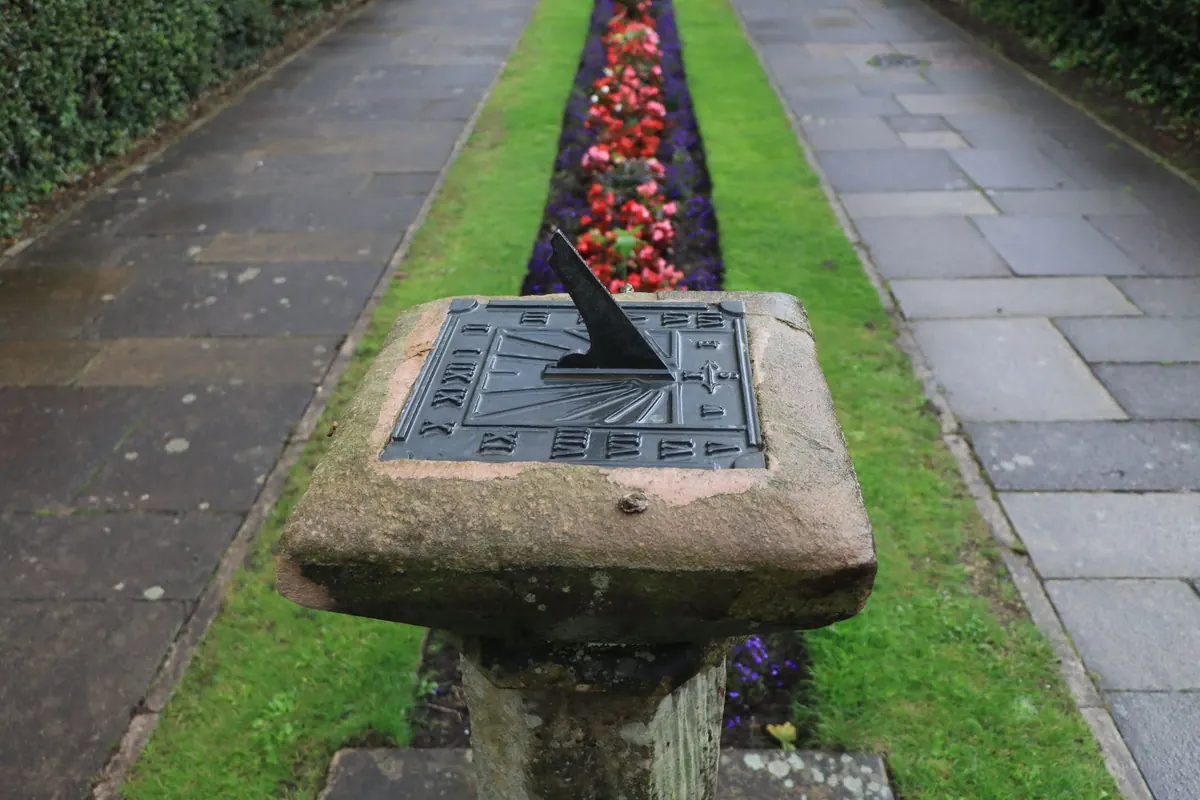
Inspect the gnomon next. A secure gnomon should feel solid when you touch it lightly, without wobble at the base. If it moves, stop before tightening anything. A cracked braze, a loose wedge, or a corroded screw can fail under force, and a bent gnomon is much harder to correct than a loose one. Check the pedestal, too: hairline cracks, soft mortar, and chipped stone are easier to address in spring than after another freeze.
Leveling is the most practical accuracy check you can do yourself. Work on a calm, overcast day so the spirit level is easy to read and the plate is not too hot to touch.
- Place a spirit level on the dial plate in two perpendicular directions. Note where the bubble sits before adjusting anything.
- Clean the bearing surface and the base so grit does not create a false high spot.
- Adjust the pedestal footing or use thin, rot-resistant shims. Do not bend the gnomon or force the plate to compensate for a leaning base.
- Recheck the level after a week. Fresh settling often shows up after the first spring rain.
Summer: Dust, Heat, and an Unobstructed Shadow
Summer is when a dial earns its keep, and also when dust, pollen, and irrigation overspray soften the shadow edge. A well-set gnomon should cast a crisp line, not a fuzzy band. Wipe the plate more often in dry weather, and rinse away mineral spots from sprinklers before they bake on. Bird droppings should be softened with water and lifted with a soft brush, never scraped with a knife.
Look beyond the dial itself. Vines, shrubs, and new fence posts can quietly steal an hour of sunlight. Trim growth that crosses the dial’s exposure, and check that no sprinkler head sprays directly onto the plate. Heat expansion can loosen fasteners, so give screws and brackets a gentle check; firm is enough. Overtightening can crack stone, strip threads, or distort a thin plate.
Autumn: Leaves, Moisture, and Early Frost Prep
Fallen leaves hold damp against stone and metal. Clear them from the plate, the base, and any recess around the pedestal. Check that drainage away from the footing is clear; water pooling at the base is a quiet enemy of masonry and metal alike. Remove sap, seed pods, and bird droppings before they harden.
This is the season to think about protection, but not to improvise. Apply a protective finish only if the maker recommends one for that material, and test it on a hidden area first. Sealing stone indiscriminately can trap moisture and worsen spalling. A breathable cover is safer than plastic sheeting, which can hold condensation against the surface. Portable dials should come inside before the first hard frost; fixed dials should be checked for loose joints and failing paint while the weather is still workable.
Winter: Freeze-Thaw and Snow Care
Freeze-thaw cycles do more damage than deep cold alone. Do not chip ice from the plate or gnomon with a metal tool, and do not pour hot water on frozen stone. Use a soft brush to lift snow, and clear a path away from the base rather than piling snow against it. Keep de-icing salt and chemical melts away from metal and stone; they can accelerate corrosion and surface damage.
Check the gnomon for ice load after a storm, and look for frost heave around the pedestal in late winter. A dial that was level in November may be leaning by March. If you cover the dial, secure the cover loosely enough to ventilate and check it after windy weather. The goal is to keep water out and let trapped moisture escape.
The Annual Accuracy Check
Once a year, on a clear day near solar noon, give the dial a proper accuracy check. Confirm the plate is level in two directions, the gnomon is secure and straight, and the shadow edge falls cleanly on the hour line. Compare the reading with a reliable local solar-time reference if you have one, and remember that a dial set for true solar time will not match a clock exactly. Daylight saving, longitude, and the equation of time all affect the comparison; if your dial has a correction table or an analemma, follow it rather than forcing the gnomon.
- Plate level in two directions.
- Gnomon secure, straight, and free of burrs.
- Shadow edge crisp at the hour line.
- No new shade from trees, buildings, or fixtures.
- Fasteners firm, not over-tightened.
- Drainage clear and base sound.
Record what you find and what you adjusted. A short note about a slight lean or a loose screw saves guesswork next year. If an antique or valuable dial will not read correctly after leveling and inspection, consult a professional conservator or diallist rather than making repeated adjustments.
Care by Material
Stone and Concrete
Use mild soap, water, and a soft brush. Avoid acid cleaners and pressure washing, which can erode mortar and force water into cracks. Do not seal unless the material and product are known to be compatible.
Bronze and Brass
A stable patina is part of the character. Rinse away grit, dry the surface, and avoid abrasive polishes. Use wax only if the maker recommends it, and address powdery green or white corrosion gently before it spreads.
Wood and Painted Metal
Check joints for rot and paint for flaking. Scrape loose paint, spot-prime, and repaint with an exterior product suited to the surface. Keep water out of end grain, and touch up rust spots before they pit.
A Short Seasonal Routine That Works
Put the checks on the calendar and keep them brief: a spring clean and level, a summer dust and shade check, an autumn leaf and drainage clear-out, a winter snow and ice inspection, and one annual accuracy review. Ten minutes in spring and autumn, a few minutes in between, is usually enough to catch the small shifts before they become reading errors. A sundial does not ask for much—just attention at the right moments.
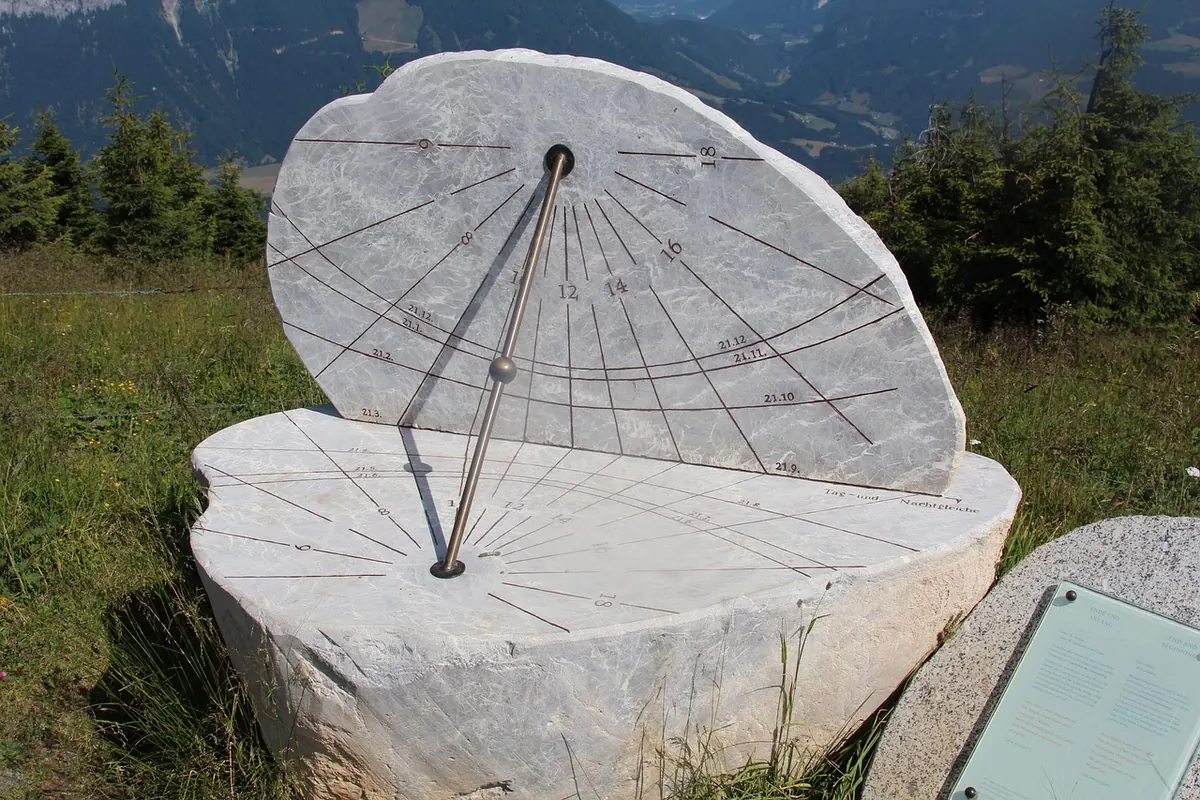
Photo: Alexas_Fotos / Pixabay
You Might Also Like
At the winter solstice a sundial's shadow stretches two or three times the gnomon's height. Here is how to plan, expose, compose and protect camera and dial in the cold.
A hands-on family guide to the spring equinox: plant a stick, track its shadow, measure it at noon, and find true north with chalk and a child's height.