Designing a Sundial Around a Garden Spring or Water Feature
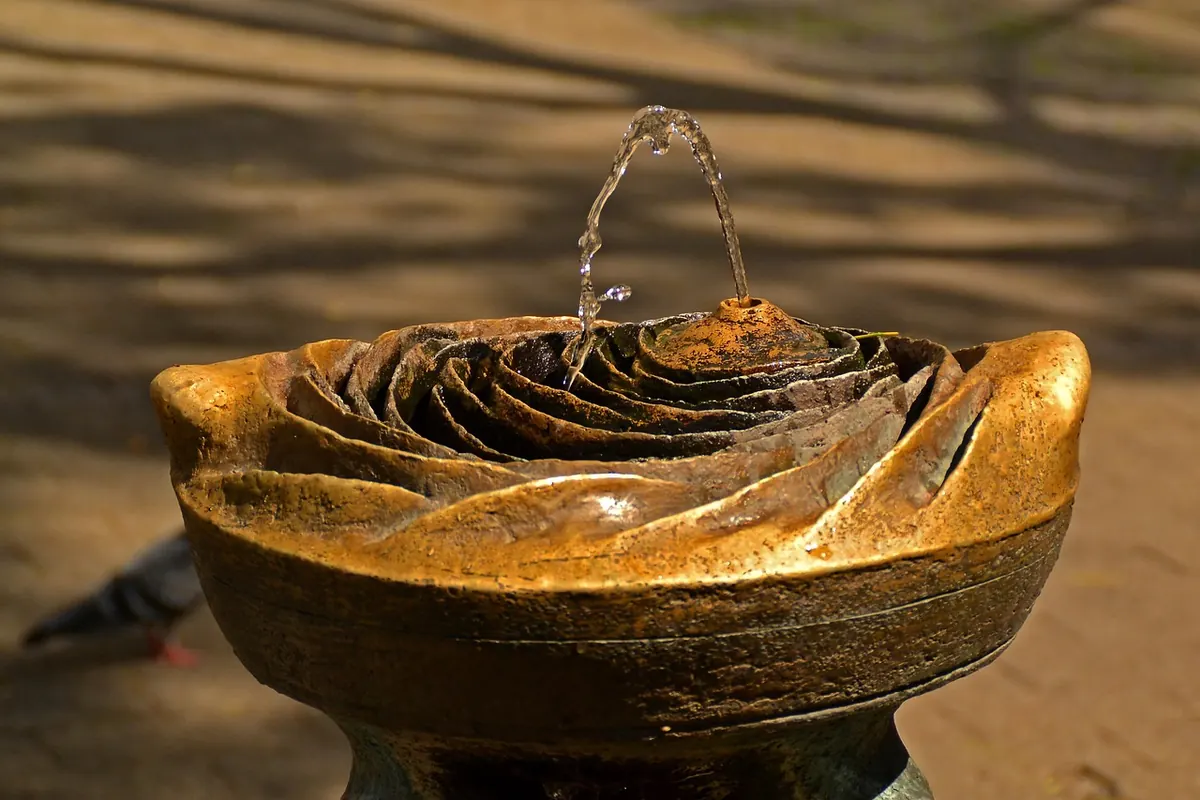
A spring or pond gives a garden a centre of gravity. It also gives a sundial a set of problems that a flat lawn never does: moving reflections, damp ground, splash, and a base that may sit close to the water table. The good news is that these constraints tend to improve the design. A dial placed with the water rather than against it becomes part of the garden’s daily rhythm, not an ornament dropped on the grass.
Begin With the Water, Not the Dial
Before you choose a dial, spend time with the spring. Note where the ground stays soft, how the flow changes after rain, and where the water sits in late winter. A spring that looks modest in July can be a sheet of water in March. Mark the high-water line with a few stakes and look at that line again after a wet week. The dial should sit outside the splash zone and above the reach of ordinary flooding, even if that means moving it a few paces farther from the water than you first intended.
Watch for frost pockets, too. Cold air settles in hollows and low banks, and a wet hollow beside a spring can hold frost long after the rest of the garden has warmed. A dial in such a spot will be uncomfortable to read in winter and may shift if the ground heaves. A gentle rise, a gravel margin, or a raised plinth solves more problems than a heroic foundation.
Read the Light Through the Day
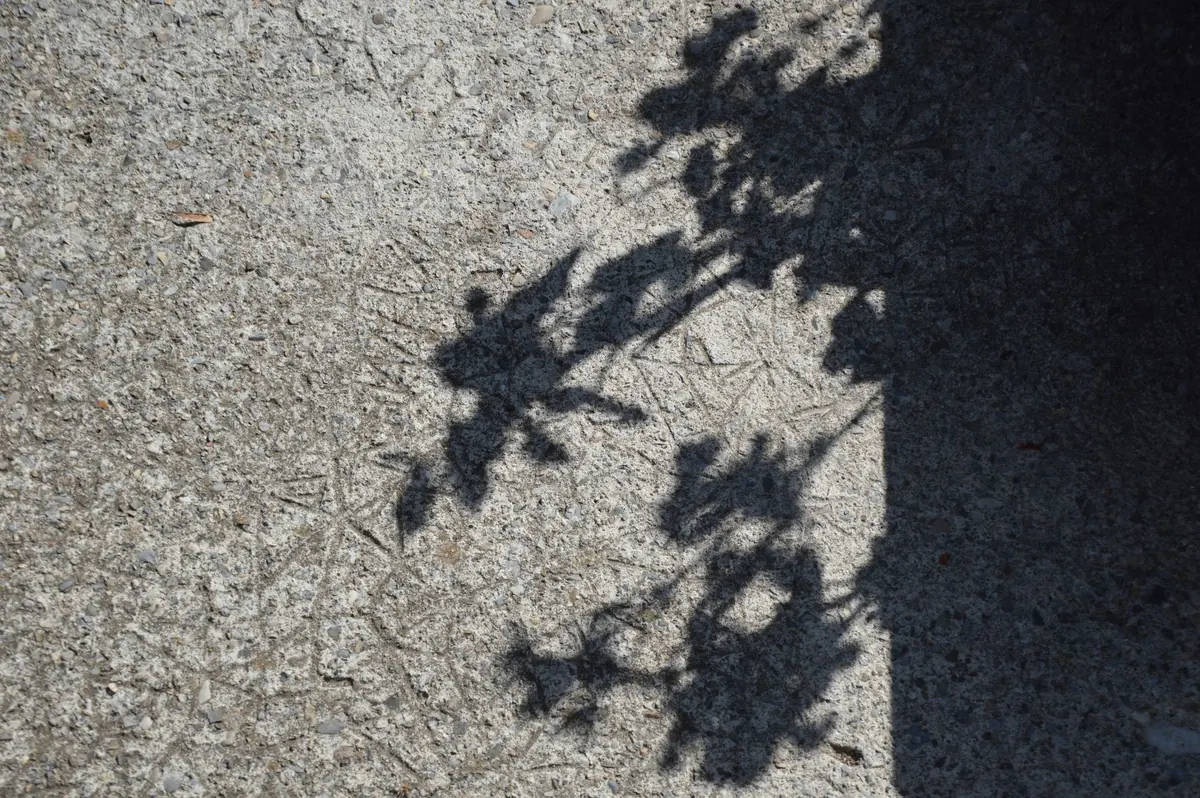
Water changes light. A mirror-flat pond can throw a bright band onto a wall-mounted or armillary dial; ripples scatter that band into a shimmer that makes a thin shadow hard to read. Even a horizontal dial face suffers when bright water sits behind it and reduces contrast. Test the site with a temporary gnomon—a straight stick set vertically in a lump of clay will do—and mark the shadow at mid-morning, noon, and mid-afternoon. Repeat the exercise in winter, when the sun is lower and reflections travel farther across the garden.
Look beyond the water as well. Pale paving, white walls, and polished stone can bounce light onto the dial face. If a reflection crosses the dial during the hours you actually want to read it, shift the dial, add a low planting screen, or change the finish to something matte. In the northern hemisphere, a horizontal dial needs an open southern sky. A spring to the south can be beautiful, but it may reflect glare back toward the viewer. Place the dial slightly to one side or raise it so the water sits below the reading line. Align the gnomon to true north, not magnetic north.
Choose a Dial That Suits a Damp Site
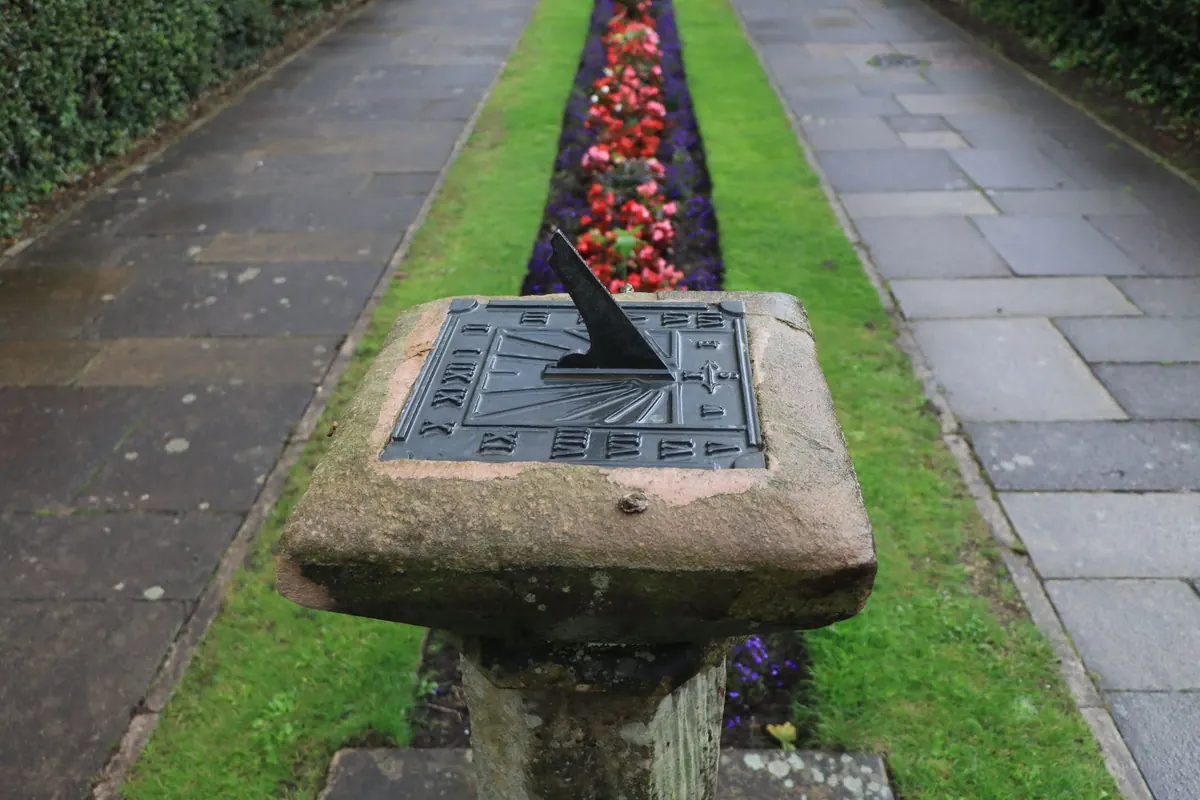
A horizontal dial on a pedestal is usually the most practical choice near water. It is easy to read, easy to clean, and less fussy about alignment than an armillary or equatorial dial. Those open-ring designs are tempting beside a pond because they look delicate against reeds, but they have more surfaces to wipe, more joints to check, and more edges to catch reflections. A vertical dial on a south-facing wall can work well if the wall is out of splash and the dial face is large enough to read from a path.
Keep the face simple. Engraved or filled lines, dark on light or light on dark, with a matte finish, will hold up better than polished numerals and bright metal. A waist-high pedestal is comfortable for adults and children alike; a low plinth may disappear under planting or become a seat for frogs. If the dial is close to water, give the gnomon a sturdy fixing. A thin, elegant gnomon is handsome until a gust of wind or a leaning gardener catches it.
Materials for Wet Ground and Bright Reflections
Material choice matters more near water than almost anywhere else in the garden. Use marine-grade stainless steel (316), silicon bronze, brass that is allowed to patinate, dense slate, granite, or good cast stone. Avoid mild steel, untreated timber, and soft porous stone that can spall after a few freezes. Polished metal is a poor choice for the dial face because it turns every ripple into a distracting highlight; brushed or sandblasted surfaces are kinder to the shadow.
Let stone breathe. A breathable sealant may help a porous plinth, but a heavy surface sealer can trap moisture and cause spalling. A drip groove cut into the underside of the dial plate keeps water from running back toward the centre. If you use bronze or brass, expect a patina and let it develop; constant polishing is a losing battle beside a spring.
Build a Base That Ignores the Water Table
The footing is where a waterside sundial succeeds or fails. Mark the centre, then dig until you reach firm subsoil rather than soft spring line. Compact a layer of hardcore, pour a concrete base, and bring the plinth up so its top sits comfortably above the highest winter water. A slight slope on the top surface, away from the centre, sheds rain and splash. If the spring is active, do not dam it. Use a gravel-filled trench or a drainage channel to let water pass, and check local rules before altering any protected spring or watercourse.
- Mark the dial’s centre and recheck the sun line with a temporary stick.
- Dig the footing down to firm ground, not just below the turf.
- Compact hardcore and pour a concrete base that will not move with frost.
- Set the plinth above the winter water line and check it with a spirit level.
- Leave the base to settle before fixing the dial, then check alignment again.
Planting, Edges, and the Long View
Planting can soften the edge of a spring without stealing the dial’s light. Low sedges, moss, creeping thyme, and small ferns work well. Avoid tall grasses that flop across the face and trees that will grow into the reading zone. Leave a clear apron around the pedestal—enough room to stand, kneel, and wipe the face without treading in the bog. Moss on the dial is a sign of moisture, not neglect; clean it gently with a soft cloth and water, and avoid abrasive pads on engraved lines.
Before You Dig: A Short Checklist
- Watch the site for a full day, including morning and late afternoon.
- Mark the winter water line and the splash zone after rain.
- Test a temporary gnomon and note where reflections fall.
- Choose a matte dial face and a simple, readable layout.
- Plan drainage so the spring can pass without being blocked.
- Check local rules if the spring is protected or feeds a watercourse.
Keeping the Dial Honest
A sundial beside water is not a fit-and-forget object. Check the level after the first winter, clear moss and algae from the lines, and trim planting before it casts its own shadows. Remember that a sundial shows local apparent solar time; the equation of time and daylight saving will make it disagree with a clock by a predictable margin. That is not a fault. It is a reminder that the dial is reading the garden’s own light, water, and weather—and doing so in a place worth sitting beside.
Photo: UweDigital / Pixabay

You Might Also Like
At the winter solstice a sundial's shadow stretches two or three times the gnomon's height. Here is how to plan, expose, compose and protect camera and dial in the cold.
A hands-on family guide to the spring equinox: plant a stick, track its shadow, measure it at noon, and find true north with chalk and a child's height.